Monday, May 13, 2013

Coping With Suicide: Blogging

As my attention span has been waxing and waning, my blogging, particularly for anything related to this series, has been grievously effected.
I don't want to talk about how I'm going at the moment, especially not here, because I know that there are people who read my blog who comment, either off or online about what I post, either to me or to my friends, which makes it difficult for me to move beyond a particular feeling, emotion, thought or expression thereof.
I don't want other people's input; I don't want other people's unsolicited input; I don't want other people's unsolicited-by-me input.

I'm finding everything difficult. I've been acting a lot lately because I'm sick of being down and I'm tired of being tired.
Today, however, has been a pajama day.
It's been a "I really want to eat a lot of chocolate and snuggle under on the couch under a blanket" day.

Little things keep reminding me of dad.
I was in Bunnings yesterday; it's possible that it was the first time since he died - I don't remember. Anyway, I wanted to cry but couldn't or didn't.
We - some friends and I - drove past the Kwinana grain terminal the other day and, again, I was on the verge of tears. It's a great fortune that I was listening to one of them give his testimony and, so, was otherwise occupied.
Someone talking about motorbikes, about single parents, about Rockingham, about Sarborough, about tatoos, about Canberra, about moustaches, about white roses; all of these things are hard to hear about.
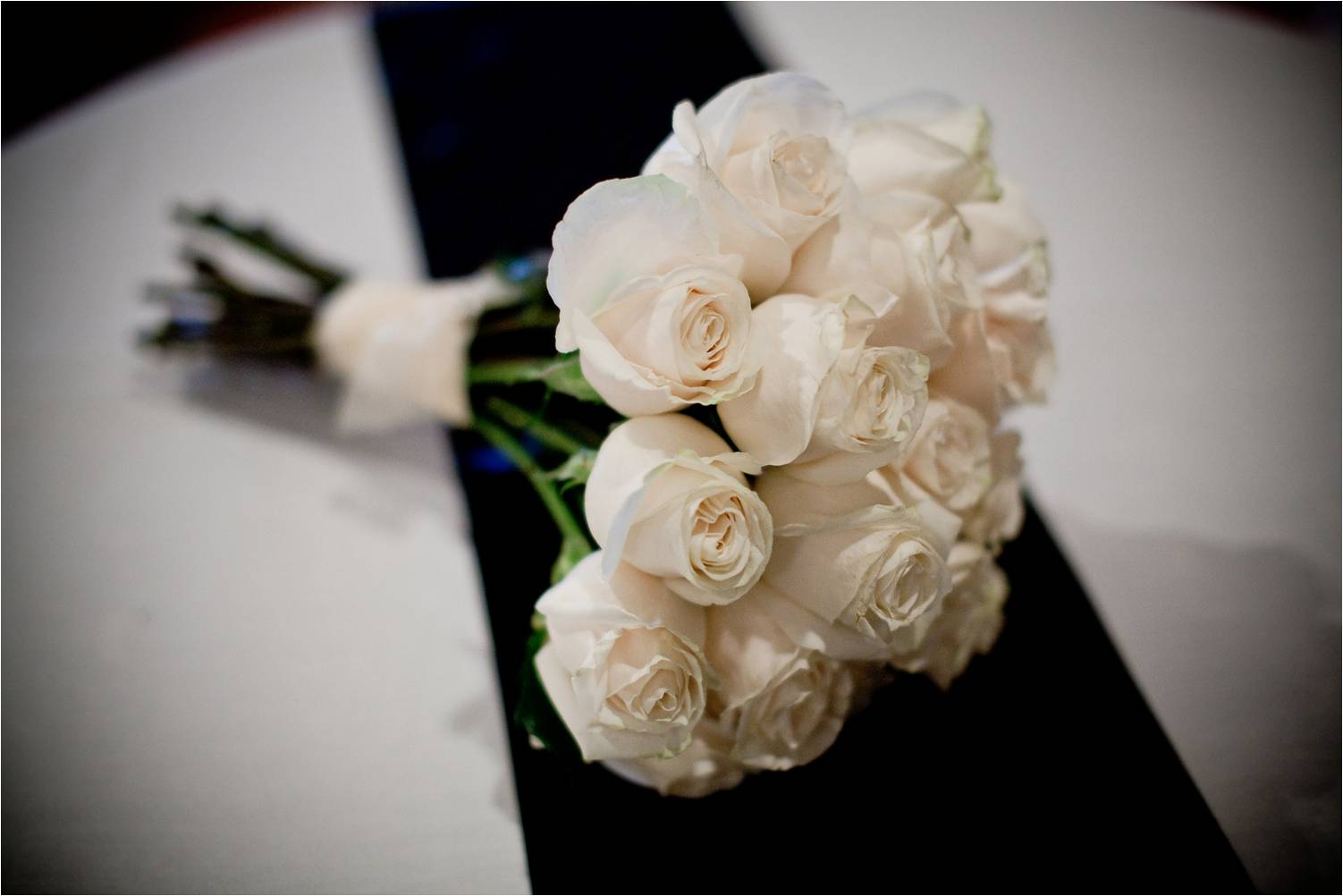
These roses are similar to the bunch I laid on dad's coffin (Credit: X)
And, yet, I missed his 5 month anniversary.
I completely missed it and didn't realise until almost the end of the following day that I had.
*sigh*

I don't want to deal with this anymore.

However, I recognise that fighting this battle is a gift; being able to fight it is a gift; having a battle to fight is a gift.
What? How?
Well, the alternative of not being able to fight is doing what dad did and that, frankly, is not an option.
The alternative of not having a battle to fight is being dead.

This, therefore, is a gift, even if it's wrapped in layers of pain, lethargy and lack-of-blogging.

Saturday, April 20, 2013

Coping with Suicide: The Road Ahead


Coping with Suicide: Manalive

"'Somebody once toldme,' said Rosamund Hut, '

Sunday, April 14, 2013

Coping With Suicide: Time and Emotions


Saturday, April 6, 2013

Coping with Suicide: I'm Not, Really

Me, Complaining on Facebook
Or, This week in Comments
Or, Tumblr Catholics Being Awesome

Wednesday, April 3, 2013

Coping With Suicide: What Do I Want?

What do I want?
I want to stop thinking about suicide.
I want my dad back. I want to tell him that I love him and I want to ask him "why?" I want him to be sober and I want him to be alive.
I want to think rationally and I want to be able to pray.
I want to be able to interact normally without having to fake it.
I want to die but I want to live.
It's not that I want to die, per se. It's that I want to escape.
Are my ideas about running away and the thoughts of suicide the same thing?
Running away won't jeopardise my eternal salvation. Maybe I should do that instead?
But that won't solve my problems.
Neither will dying.
I want to be normal. That is, I want to be healthy and stable.
I want to fight this.
But I also want to give up.
I want to cry.
I want to cry and not stop.

Argh! That reminds me of what dad wrote.
Crying though the tears have run out.
Not being able to cry but the tears won't stop.
That wasn't it, but that was the gist.

I want peace.
I don't want to be suicidal.
I want to be healthy.
I want to understand.
I want to cope.
I want to do better than cope.
I want to live and to live well.
I want to "have life and have it abundantly."
I want to be able to pay rent.
I want to live, yet I - not I, though - want to die.

I do not want to feel this conflicted.
I want to know what 'fun' is.
I want to not fake happiness or enjoyment.
- I want it to be genuine.
I don't want to cry.

I need to be able to talk and cry and talk.
And I need to be able to do it without limit. I need to not stop after 6 or 8 or 12 sessions.

I need help.
I'm scared.

What if this can't end?
I want to sleep forever
and wake up happy.

I want to laugh genuinely.
I want to live.

I don't remember what happiness feels like.

Monday, April 1, 2013

Coping with Suicide: Outgrowing the Pain


Friday, March 29, 2013

They Crucified Him: Station XIV

This series iss not my own work, but all taken from Rev Robert Nash, S.J.'s reflections on the Stations of the Cross: They Crucified Him. I have posted one Station a day in the final days before today, Good Friday. Here is the final post, the Fourteenth Station and the Conclusion.
***   ***   *** 
XIV.

What a desolate little party they were, who followed His dead body to the tomb! You would say, as you walk after them in the last of the stations, that you could imagine no more ignominious failure than this. But are you right? Even as they are walking to the place of burial, He is already beginning to enter upon the hour of His triumph. For no sooner had He expired on Calvary than His soul went to Limbo (the Limbo of the ancients) and we can dimly imagine the ecstasy of joy with which the souls imprisoned there heard the gladsome news of their fast-approaching delivery.

The faithful prophets and patriarchs of the Old Testament are there. The heroic mother of the Machabees who sacrificed her seven sons rather than violate God’s Law, Judith and Esther — types of Mary His Mother, Saint Elizabeth, Saint Zachary, and their son the Baptist, Saint Joseph His foster-father — all these names come readily to mind as we enter with the triumphant Christ into that prison house.

The place is flooded with light, for Jesus is the true light, and we hear the heartening message: “Come ye blessed of My Father, possess the kingdom prepared for you from the foundation of the world.”

The triumphant message continues, and on Sunday morning His sacred soul returns to Calvary to be re-united with His glorified body. Such a contrast now — no more suffering or disfigurement — but the face of Our Lord radiant with joy as He hastens, first to His Mother, and then to one friend after another, to speak to them of the kingdom of God, and to assure them that He is risen indeed. “Where, O death, is your victory? Where, O death, is your sting?”

Without the hope of our own resurrection too, life would be a sort of blind alley. But we know that if we suffer with Him we shall certainly rise with Him. And even in this vale of tears, we can begin to share in the joys of that resurrection. For there is a resurrection above our sins and passions, there is a resurrection above our worldliness and our petty jealousies, above our cramped and narrow selves, a resurrection befitting men destined to share, even here, in the glorious liberty of the sons of God.

We are told that He was risen “truly” — no mere appearances, but in very reality. After having thought on the lines indicated as we walked with Him to Calvary, surely that must be the first trait in our resurrection also — no mere external conversion, but, what He values alone, a conversion of heart, a turning of the heart away from sin, to be inflamed by His love. His resurrection was lasting, for “Jesus Christ being risen from the dead, dies now no more.” He wants from us too, a clean breakaway, a definite and entire severing of the manacles that have held us captive — such as we saw when thinking about our last fall. And, after His resurrection, He appeared openly, letting everyone know of the wonderful change. Let me not be afraid to imitate Him here also. Many are timid about giving the impression that they love Him enthusiastically, and, whatever they have been in the past, are now determined to canalise all their energies in one direction — to make Him known and loved.

He rose truly; He rose never again to die; and He let the world know of His resurrection. So, the little procession to the tomb is not so desolate after all, for Calvary is not the end but only the beginning.

One of Michelangelo’s greatest works is the ceiling of the Sistine Chapel. The surface measures some ten thousand square feet, and it is covered with over eight hundred figures, some twelve feet long, others eighteen, all most carefully and conscientiously finished. Every detail of each picture stands out with marvellous truth to nature — the hairs of the head and beard, the finger-nails, the creases in the garments. A masterpiece, an everlasting monument to the genius of him who produced it!

But what a price it cost him! Day after day, the artist had to work, lying flat on his back, with the paint dropping down on to his face, In the course of time his eyes grew so accustomed to looking upwards that, long after he had finished his beautiful ceiling, he would have to hold a letter above his head in order to read it. You can produce a masterpiece only by being willing to pay the price.

We have seen the price paid by Our Saviour as we accompanied Him and His Mother from station to station.

His masterpiece is the human soul pulsating with His own very life. Treasures of grace He has accumulated on Calvary, and He longs for the soul to draw near and be filled. Could we see into a soul radiant with sanctifying grace we would drop down on our knees in adoration, thinking ourselves to be in presence of God Himself.

How do you think Michelangelo would feel if, when coming one morning to continue his glorious work, he found that during the night his pictures had been destroyed, that someone jealous of his genius had smeared paint all over his ceiling, effacing entirely those lovely images? It is a feeble expression of Our Lord’s attitude towards sin which utterly undoes the grand work which cost Him such a price. And suppose that during the night, the great artist conceived a new idea, and next day proceeded to put it into execution, and after a month or two has the satisfaction of seeing it in all its perfection, how his heart is gladdened by his success! But again, his joy and satisfaction are negligible compared with the joy the soul gives to Christ and Mary by endeavouring faithfully to correspond with their inspirations.

Admittedly this is hard to understand, for it is all to the soul’s interest, here and hereafter, to co-operate thus with the workings of grace within her. So concerned is Jesus about the soul’s sanctification that you would be inclined to believe that to Him some advantage must accrue from its fidelity and advancement. Nothing of the kind.

All the benefit is to itself. Why then does Christ “bother” about the soul? Why not allow it to go its way? Why pay such a price for its redemption? Only one answer is possible, and we have seen it already. Love is the only explanation. “Greater love than this no man has, that a man lay down his life for his friends.”

On our first page, we promised to try to develop one single idea at each of the fourteen stations, and it may help us, when making the stations to have that idea in a form which is easy to remember. So, here is a summary, indicating each of these ideas in the corresponding station:

I. Independence of men’s opinions. Jesus is condemned to death.
II. Is it I, Lord, who am “guilty of death”? Jesus carries His cross.
III. Hell, and the sinner’s first serious fall. Jesus falls the first time.
IV. The fiat of Jesus and Mary. Jesus meets His mother.
V. The apostolate — a responsibility and an honour. Simon of Cyrene helps Jesus to carry the cross.
VI. Veronica and how to sanctify pleasure. Veronica wipes the face of Jesus.
VII. The falls “in-between.” Jesus falls the second time.
VIII. The safety of the hard way. Jesus meets the women of Jerusalem.
IX. “Never again” — the sinner’s last fall. Jesus falls the third time.
X. The completeness of the giving of Christ. Jesus is stripped of his garments.
XI. The soul’s Crucifixion and exaltation. Crucifixion: Jesus is nailed to the cross.
XII. Calvary and the Mass. Jesus dies on the cross.
XIII. Suffering, the acid test of love. Jesus is taken down from the cross.
XIV. Calvary, the prelude to our resurrection. Jesus is laid in the tomb.

Thursday, March 28, 2013

They Crucified Him: Station XIII

This series is not my own work, but all taken from Rev Robert Nash, S.J.'s reflections on the Stations of the Cross: They Crucified Him. I will post one Station a day in these final days before (and concluding on) Good Friday. Here is the Thirteenth Station.
***   ***   ***
XIII.

A few years ago a little boy was dying, aged nine and a half. His mother, broken-hearted, was kneeling by the bedside. “When you go up to heaven, son,” she said, “you’ll ask Our Lord to send something to mother, won’t you?”

And what will it be? There was a short pause and then the child, gasping for breath and holding mother’s hand, managed to murmur: “When I go up to heaven, I’ll ask Our Lord to send you much — suffering and pain!” Of course, the mother was dumbfounded, but the little lad continued: “Yes, mother. I’ve noticed that He kept a lot of it for Himself, and gave a lot to His own Mother whom He loved. It must have a great value then. If He couldn’t find anything better for His Mother could I ask Him anything better for you?”

Often when the cross presses heavily upon our shoulders we are inclined to ask querulously what have we done against God to deserve to be punished so. Such a question dies away on our lips if we kneel on Calvary in the thirteenth station. Nicodemus and Joseph are taking out the nails from the hands and feet; for Jesus is dead.

Reverently they lower the sacred Body and Mary stands there in mute agony to receive It into her arms. Between them, they bear this treasure over to the “Stone of unction” — a table of hard stone, convenient for the work of embalming. Some horsemen, tradition says, pass by while the friends of our Lord are washing His wounds and embalming the Body, and horrified at the sight of His mangled condition, they stop to ask what He has done to deserve this. The answer is that He has done all things well, but He has submitted to this unparalleled butchery because He loved. That is the only explanation.

And as Mary sits there watching, holding His sacred head between her hands, pressing the wounds to her heart — now His hands, now His lips — ask her, and the answer is the same. Mary loved, and Mary’s love too must be subjected to love’s most searching test — readiness to suffer for the sake of the one loved. She must share in men’s salvation; she must be given opportunity to show her love for them, and for the Father’s glory, so she too is permitted to suffer to a degree impossible for us to fathom or guess.

You can ask any chance acquaintance to perform a service that costs little or nothing — to open a door or drop a letter in the post-box. But if your request is going to make demands on his spirit of self-sacrifice — if it implies that he must hand you a large sum of money, or necessitates his denying himself a holiday or a free day, or if it will mean that he must endure for you hunger or thirst — if your request is going to include any of these things you are not going to turn to a chance acquaintance. If you have a true friend and his adoption tried, to him you will go, confident that he will do what you want, even at such a cost to himself. And your confidence is built up on the knowledge you have that sacrifice is the test of love.

We prove our love for Christ by prayer, by works of zeal, by organising sodalities and similar associations, but there is a proof more sure than all these or any of these. It is especially when He turns to us and asks us to suffer that He shows He can depend upon us to give the proof par excellence.

Wednesday, March 27, 2013

They Crucified HIm: Station XII

This series is not my own work, but all taken from Rev Robert Nash, S.J.'s reflections on the Stations of the Cross: They Crucified Him. I will post one Station a day in these final days before (and concluding on) Good Friday. Here is the Twelfth Station.
***   ***   ***
XII.

All through this Way of the Cross, we have been watching how Christ gives. Now the question arises: “Is all the giving to be on His side?” And the answer? We have a gift too to offer to God, one only gift and it is actually the same which He Himself is offering in the twelfth station. The sacrifice He is making here of His life, is ours to offer too, through holy Mass. What an ineffable privilege it would have been to stand or kneel on this hallowed spot while Jesus was hanging on this cross! When we come to Mass, we are not coming merely to say our prayers, or make a visit, or go to Holy Communion. We are coming, first and before all else, to offer Jesus to His eternal Father — that Jesus may plead for us as He pleaded here on Calvary, that He may thank the Father in our name for the innumerable gifts lavished upon us, that He may adore the Father and supplement our inability to do this in a fitting manner. Jesus belongs to us and we present Him, as the only gift worth while, to His eternal Father. We stand in spirit with Mary near the cross and continue the stupendous offering made on Good Friday.

Complaints are made about us that we do not understand the value of the Mass and that, as a result, we come late or not at all. If there is question of catching a bus on Sunday morning to get to a match, we take very good care to be in ‘our queue’ in time. But ten minutes or a quarter of an hour after Mass has begun is good enough for Jesus Christ! There is not much use in abusing Catholics who act in this way. Rather, let them sit back and try to realise what the Mass is. That is to get at the root of their trouble — little love for the Mass because little understanding of its marvellous significance.

And why is it true that “of all honours that have ever been rendered to God,” to quote Saint Liguori, “whether by the homage of the angels and by the virtues, austerities, martyrdoms and other holy deeds of men, none could procure so much glory for Him as one single Mass?” Why? Because, in the Mass, Jesus takes our poor prayers and acts, and makes them His own, presenting them on our behalf to the Father. “He catches them up,” writes Bishop Hedley, “in His own infinitely strong and perfect acts and so carries them to the throne of His Father.”

You consider yourself fortunate if, when seeking a favour from somebody in a high place, you have a friend of his to plead your cause. Jesus pleads in the Mass — the well-beloved Son of God. He it is Who presents our prayers and petitions with His own, just as the priest offers, in one and the same chalice, the wine and with it, the tiny drop of water.

Mass continues Calvary. That is why you cannot dissociate the two, and the twelfth station leads you almost imperceptibly into thoughts concerning the Mass. Indeed this station is represented at every Mass for at the altar the crucifix must be placed, to keep vividly before our eyes the amazing truth that we need not envy Magdalene or John, or even the Blessed Mother, their privilege of standing by His Cross. What we should beg for in this station is a deeper faith, for if that comes then our eyes will be opened to see into the depths of the mystery of the Mass and our hearts inflamed to love it. “The active participation of the faithful,” writes Pope (Saint) Pius X, “in the sacred mysteries . . . is the first and indispensable source whence is drawn the true Christian spirit.”

Tuesday, March 26, 2013

They Crucified Him: Station XI

This series is not my own work, but all taken from Rev Robert Nash, S.J.'s reflections on the Stations of the Cross: They Crucified Him. I will post one Station a day in these final days before (and concluding on) Good Friday. Here is the Eleventh Station.
***   ***   ***
XI.

The following extract is from Songs in the Night by a Poor Clare Colletine, and it will serve to introduce the eleventh station in which Jesus is nailed to the cross and raised up upon it. “What each soul is interiorly, face to face with God, unknown to anyone, is of vital consequence to all the human race, and every act of love towards God, every act of faith and adoration, every mute uplifting of the heart, raises the whole church, yea, the whole world, nearer to God. From each soul that is in union with God and at rest in the divine embrace, radiates a spiritual vitality and strength and joy which reaches from end to end of the universe, a source of grace to those least worthy of it and knowing nothing of how and whence it came.”

Thus, the more a soul grows in holiness the more grace it draws down upon other souls. And what is holiness? Is it necessarily saying long prayers or performing frightening penances? No. Such things we find in some of the saints indeed, because by these means they make contact with Christ, the source of holiness, and ease their own cravings to atone to Him for sin. But it is “what each soul is interiorly” that really matters most. Each soul is to come “face to face with God,” and from this source to be filled with God’s own very life and energy — which sharing in His life we call sanctifying grace. The more fully the soul participates in this divine life the more it grows in holiness, and the more widely diffused will be its “spiritual vitality and strength” to save and sanctify other souls.

But before the soul can be filled in this marvellous way with God’s own life, it must first of all be emptied of sin and sinful attachments, and in this eleventh station, Jesus shows how this is to be done. For here, He is crucified, and the soul that would grow in sanctity must be crucified also. “They that are Christ’s have crucified their flesh with the vices and concupiscences.” Why? Is it that God delights in seeing His servants and friends suffer? Not at all.

But the gift of His grace can be communicated to a soul only in the measure in which the soul is capable of receiving it, and as long as sin and deliberate sinful desires reign, the streams of the divine life are held in check.

If you want to sow flowers in your garden, you must first uproot the weeds. If you want to pour gold into a vessel already full of mud, you must first make space by throwing the mud out. Now the life of sin is transmitted to us as a sad heritage from Adam, and that is why suffering — “crucifixion” — is necessary. The “space” so to say, in our souls which should be occupied with the life of God is filled with the life of sin and selfishness, and before the divine life can be established and consolidated, the other must be put to death. Every act of self-conquest, every effort to push back the confines of the life of selfishness leaves more “room” for the divine life to expand, and so we pray, in a pregnant phrase put on our lips at Mass, that we may become “capaces sanctae novitatis” (made capable of new holiness). (Final prayer in Mass for Tuesday in Holy Week.) May we deepen the capacity of our souls to contain more and more God’s gift of grace!

That is a thought which we may profitably ponder and examine ourselves upon, as we kneel and watch Him being crucified.

But there is more. Our Lord said: “I, if I be lifted up from the earth will draw all things to Myself.” He is crucified first and we have seen the application to ourselves of this first incident in the eleventh station and, after He is nailed, He is elevated on the cross. In the measure in which the soul learns to withdraw by penance from what is sinful, in the same is she too raised nearer to God. She begins to relish the things of God — prayer, especially, and works of zeal. The mind is now absorbingly interested in what concerns God and His glory, so absorbed indeed that it is difficult for her to bother about anything else. The news of the day, the ways and means of making money, the pleasures which were formerly such a source of delight and excitement — these things have lost all their charm, for the soul has discovered other interests which are dearly perceived to surpass immeasurably in importance the trivialities upon which many men pour out their time and affections. Through the force of God’s grace, the soul too is “lifted up” into the bracing air of the supernatural.

Just as the trembling little thrush lying in your hand, will spring, by the very force of its nature, into the glorious freedom of the open sky the moment you release your hold, so the soul delivered from the bondage of sin, soars swiftly into the light of God. And just as Our Lord promised to ‘draw all to Himself’, so too the soul, when freed herself and exulting in her new-found happiness, must needs share her treasure with other souls. Perhaps, like the Little Flower, it will be the soul’s vocation to remain near to the source of this divine life and by prayer and sacrifice to open the sluice-gates of grace and in this way bring salvation to men. Perhaps the soul, intoxicated with divine love, will “leave God for God,” by engaging in the works of the active apostolate. Which it is to be is God’s will to decide, but in either case the object is the same — to be “a source of grace, reaching from end to end of the universe.”

Monday, March 25, 2013

They Crucified HIm: Station X

This series is not my own work, but all taken from Rev Robert Nash, S.J.'s reflections on the Stations of the Cross: They Crucified Him. I will post one Station a day in these final days before (and concluding on) Good Friday. Here is the Tenth Station.
***   ***   ***
X.

The stripping of Our Lord is symbolical of the completeness of His giving. “He emptied Himself,” writes Saint Paul, “taking the form of a servant.” (Philippians 2:7) And the prophet, speaking in His name asks: “What is there that I ought to do more to My vineyard that I have not done to it?” (Isaiah 5:4) We ourselves have the phrase, when we want to express our readiness to go to any lengths to help a person, that we are prepared “to take the coat off our back.” We shall better understand that Jesus left nothing undone if we recall Who He was.

He was God, first of all, but in this Sacred Passion who could possibly recognise Him as such? All the way through the Divinity hides Itself. At any given moment, He might have exercised His divine power to end the tortures His enemies were inflicting upon Him. We know how eagerly we welcome relief in pain — an aspirin when we have a bad headache, a refreshing drink to assuage our thirst on a burning hot day. What love is implied in the sentence of the apostle that Our Lord “delivered Himself up!” (Ephesians 5:25) He handed Himself over to them to torture Him, and He kept His divine power steadily in check when He might have used it to paralyse the hand that smote Him or drove the nails into His sacred body. “He was offered because it was His own will.” (Isaiah 53:7) He began to suffer when He willed and He continued willing to suffer all that we are contemplating as we follow Him. He need not have begun to suffer, and His enemies continued to have power to make Him suffer simply because all the way through He refused to stop them.

Jesus was God. He was man too, and how are we going to make even the barest summary of the completeness of His giving as man? The strength of His body is reduced to utter prostration. Its beauty — and He had been “beautiful above the sons of men” (Psalm 45:2 or Psalm 44:3 in the Vulgate) — is so marred that the prophet describes Him as “a worm and no man,” (Psalm 22:6 or Psalm 21:7 in the Vulgate,) a “leper,” (Isaiah 53:4) a man from the crown of Whose head to the sole of His feet is one mass of wounds and blood. As man, He possessed a human soul, all the powers of which were placed unreservedly at the disposal of those He loved. His mind was continually occupied thinking out ways and means to help them. His will bent all its energies in one direction — to labour for them, to pray for them, to heal them, to die for them. Over and above all this, on the night previous, He gave them Himself in the Blessed Eucharist and presently on the cross, He will give them His Mother.

It is most literally true that He has nothing left. “What is there that I ought to do more to My vineyard that I have not done to it?” A Lover Who is omnipotent has been lavish of His power to do. A mind that is divine seems to challenge us to excogitate anything still left, in order that, if we succeed, He may do it for our sakes. A heart that is throbbing with infinite love has given superabundantly. So in this tenth station He lets them take the coat off His back to indicate that omnipotence and infinite love have conspired together to ensure the completeness of the measure of the giving of Christ. If the sinner does not now understand that Our Lord is ready to forgive and to restore him, what more can omnipotence and infinite love do to convince him?

Sunday, March 24, 2013

They Crucified Him: Station IX

This series is not my own work, but all taken from Rev Robert Nash, S.J.'s reflections on the Stations of the Cross: They Crucified Him. I will post one Station a day in these final days before (and concluding on) Good Friday. Here is the Ninth Station.
***   ***   ***
IX.

Here in the ninth station Our Lord’s last fall is brought before us for our reverent consideration. His last fall — and mine? What a comfort it would be to the sinner if, kneeling here he could assure himself that never again would he offend God, at least mortally. That, no matter how black the past had been, he was certain that now at least he had begun in earnest, and that the fall into mortal sin which he endured, an hour ago, or a week ago, or a month or a year ago — that that was his last fall. That this day, and this journey with Jesus and Mary, made today in this church, are going to mark a definite break with occasions which in the past have enticed the sinner back into the ways of sin!

The sinner’s last fall! Why not? Doesn’t everyone who ever tasted sin know that it is poison — a poison not without its sweetness for the time being, but no sooner drunk than it leaves in the sinner’s heart a feeling of disgust and self-contempt? And, in spite of the frequency of one’s experience, in spite of the fact that we ought to realise the price which will certainly be exacted afterwards in shame and anguish, none the less the serpent has continued to deceive us, time and time again. He did this with our first parents in paradise; he has done it successfully for thousands of years and with the millions of Adam’s sons and daughters who have lived since.

And you, who are now following Christ and Mary to Calvary? He has deceived you too, has he? Perhaps so, but, please God you have had your last fall. What encouragement you experience as often as you recall that it is impossible to express the love that wells up in the hearts of Jesus and Mary for the poor soul that has fallen and that now fears the force of the bad habits developed! But that love of theirs is not mere sentiment. It is beyond question that a cure is possible, that many who stumbled and fell badly on the way did finally arise and go straight. More than that. Many repentant sinners, having had their last fall, arose to climb to heights of great sanctity. Why?

Because the love of Jesus and Mary for them translated itself into action; immense graces were poured into those sorrowful hearts, and new vigour and new life resulted.

Listen to the grand prayer of the penitent Saint Augustine and make it your own. “Take my heart, O Lord, for I cannot give it to You. Keep my heart, O Lord, for I cannot keep it for You. Send me any cross O Lord, which may keep me subject to Your cross, and save me in spite of myself!” If only I could be sure that the past was all right, and that I would not fall again, then I might take courage and do. But there have been so many false starts, when I thought all was now at last firmly set for the rest of the journey, that I have lost hope! How often cries like these are wrung from the poor sinner’s heart! But who can estimate the consolation given to Christ when, despite that fierce temptation to abandon the struggle and make a truce with the enemy, the sinner arises once more to his feet, and once again takes hold of the cross, resolving to wage unceasing war on that sinful inclination, and, following in Christ’s footsteps, refuses to be beaten and stoutly affirms to himself the truth that that fall was definitely his last one?

It is not only those who have preserved their innocence who give much glory to God, but those too who are broken-hearted with sorrow and resolved to turn away from sin and its occasions. Mary Immaculate followed Jesus to Calvary. But so did Mary Magdalene, the woman who once was a sinner, and who, hearing one day of this wonderful Jesus of Nazareth met Him, knew Him, loved Him, and from that hour counted the date of her last fall.

“The soul,” writes Saint Teresa, “should firmly resolve never to submit to defeat, for if the devil sees someone staunchly determined to lose life and comfort and all that he can offer rather than return (to sin), he will the sooner leave it alone.”

Palm Sunday


Saturday, March 23, 2013

They Crucified HIm: Staion VIII

This series is not my own work, but all taken from Rev Robert Nash, S.J.'s reflections on the Stations of the Cross: They Crucified Him. I will post one Station a day in these final days before (and concluding on) Good Friday. Here is the Eighth Station.
***   ***   ***
VIII.

In the sixth station, we saw Our Lord accept the comfort offered to Him by Veronica, and we might have noticed the same when He allowed Simon to relieve Him of the weight of the cross. But, for the few isolated instances wherein He accepts, there are very many wherein He refuses to avail of the consolation offered. Indeed, the whole Passion is a seeking out of what is hard and repellent to human nature. In the eighth station, we find the holy women weeping tears of compassion for Him in His truly heart-rending condition, but He does not, in this case, take what is offered to Him. Instead, He directs them to weep over their own sins.

Why does He refuse consolation and why should this be His more ordinary mode of procedure? In His case, there could have been no danger of His seeking it inordinately. If He was to accept the sympathy offered, as He did when He met Veronica, or when He ate with sinners, it is beyond question that He would have pleased the Father by doing so, and that His choice would have been determined by that motive only.

But He has come to give us an example and He knows all that is in man. He knows, therefore, that we are biased in favour of what pleases us naturally, and that there is need to suspect ourselves if we yield easily and frequently to our tastes and fancies, even if we tell ourselves that our motive is pure. “The kingdom of heaven suffers violence and the violent bear it away.” The hard way is, generally, the safer way, if the soul is to advance in holiness. It is true that the hard way too has its dangers of pride, or imprudence, or lack of perseverance, but one must remember that the easier way is also beset with subtleties and snares. The question therefore is, which road has fewer perils, and the example of Our Lord and the saints indicates unmistakably that it is ordinarily the hard one. In an individual case, there may be room for doubt whether to take what is pleasant or hard, but the general principle stands firm.

“Let each one reflect,” writes Saint Ignatius — and the words have been cited as being an epitome of his whole teaching — “that he will make progress in all spiritual things in just the same proportion as he divests himself of self-love and self-will and self-satisfaction.” “Without mortification, and I say it boldly,” Saint John of the Cross tells us, “we shall make no progress towards perfection, nor in the knowledge of God and of ourselves, notwithstanding all our efforts, any more than the seed will grow which is thrown away on uncultivated ground.” And, in many subsequent pages he goes on to lament bitterly over those souls who come to the service of God and advance a certain distance and who do not ordinarily fall into serious sin, but who yet, because they lean on creature comforts inordinately lose the immense graces which God would pour into them if they were only more generous in the practice of detachment. “Even one unruly desire, though not a mortal sin, sullies and deforms the soul, and indisposes it for the perfect union with God, until it be cast away.”

These are hard sayings, but they mark the way traced by Jesus and Mary on the road to Calvary. And it is the unanimous teaching of the saints, who accept these hard sayings literally and aim consistently at living them — it is their experience that once they seriously undertook the task of self-abnegation, tolerating in themselves no deliberate fault and ruthlessly suppressing the movements of self-love — that from that day they can recall how a generous God flooded them with light and grace, and poured into them a torrent of joyousness such that no earthly satisfaction could compare with it.

Saint John of the Cross was nine months in a dark prison cell, during which time he was flogged every day, and nearly starved, and insulted, and taunted. Afterwards he assured a Carmelite nun that so great was the joy he experienced in his soul during that long period of imprisonment, that, for a moment of it a hundred years’ such privation would be a small price to pay. Is it any wonder that he waxed eloquent on the disastrous loss sustained by many tolerably good souls because they cling inordinately to merely human consolations like those which Jesus rejects in this station?

Friday, March 22, 2013

They Crucified Him: Station VII

This series is not my own work, but all taken from Rev Robert Nash, S.J.'s reflections on the Stations of the Cross: They Crucified Him. I will post one Station a day in these final days before (and concluding on) Good Friday. Here is the Seventh Station.
***   ***   ***

VII.

It is likely that Our Saviour fell several times for He was more dead than alive as He stumbled along the cobbled streets. In this case, there would have been a first fall and a last fall, and three or four — perhaps even more — in between. The fall we commemorate in the seventh station then, may be regarded as being representative of that uncertain number occurring between the first and the last.

As the sinner contemplates it in this light, he can scarcely avoid recalling his own falls into sin from that sad day when first he grievously offended God down to the last mortal sin. How many such falls were there? Impossible, it may be, to reckon. He remembers good confessions made and firm resolutions taken, but after a while, these were forgotten and world and flesh and devil returned to the attack and captured once more the citadel of his soul. He recalls fervent missions or retreats. He thinks of the earnestness with which he assured the Lord “never more will I offend You.” He thinks of the hymns he sang and meant, expressive of his sorrow, but, somehow, that contrition did not last, and when the atmosphere changed and the old sinful associations came back, he forgot all about his promises to God and all his good intentions.

The falls in-between! Suppose a child had the insolence to strike his mother a deliberate blow across the face.

But presently, realising the wickedness of the act he falls on his knees and begs pardon. And mother, because she loves, easily forgives and tries to forget. But lo, the next day, perhaps even that very night, the same offence is repeated. It is followed by another apology, but yet a third and fourth time, at every opportunity, that child raises his hand and strikes his mother. What would you think of the genuineness of his act of sorrow? Possibly indeed, he is sincere, but taking the whole proceeding at its face value, you would be inclined at least to doubt if that boy meant what he said when he assured his mother of his grief for his often-repeated sin.

Treat a human friend like this and the chances are that you sever the friendship for ever. Treat even a loving mother in this hard-hearted way and even she will ultimately grow tired of forgiving. But so immeasurably does divine love exceed even the strongest and purest human love, that it is prepared to go on forgiving even till seventy times seven times.

If, through God’s mercy and grace a man or woman has kept free from all mortal sin, or at least has done so for a long time, there is still much matter for thought and prayer in connection with this seventh station. Looking back over those years such a person will see innumerable infidelities and venial sins, and an apparent inability to eradicate them. After so many years, trying to serve God there is still that bad temper which makes one impossible to live with. There is that slanderous tongue. There is that seeming lack of all love of prayer. There is petty jealousy. There is laziness. There is the shirking spirit which leads a man always to seek what is easiest for himself and let the difficult and disagreeable part go to his neighbour. There is love of ostentation, and worldly ways, and pride and censoriousness.

All this and more like it has been going on for years. And, during these years too, that man or woman has been perhaps almost a daily communicant. Who can estimate the opening such people give for hard criticism of religion?

Others will argue, illogically of course, but yet they will voice their opinion loudly and with conviction, that if such religious people can speak so harshly or treat their servants with such injustice or fly into tempers that are a source of constant trial to others — if religious people are like this, what’s the good of going to sacraments and Mass, and saying prayers? Looking at Jesus lying flat under the cross in this second fall, one sees what good reason there is to strike one’s breast for the innumerable falls sustained on the road of life, even though they did not amount to mortal sin.

Though, these lesser faults have a consoling aspect too. Saint Francis of Assisi, when he saw how pride had brought one of his brethren to ruin, lay down on the ground saying: “Only here is a man safe!” The memory of these lesser faults and one’s inability to grapple with them can be turned to account by increasing that virtue which lies at the foundation of all true holiness — genuine humility. A merciful Lord permits them in order to warn us that if we are weak in face of comparatively small temptations, we may not pride ourselves because we do not fall into mortal sin.

“Our Lord,” writes Saint Francis de Sales, “treats us in just the same way as a good father or mother, who lets the child walk quite alone when it is in a soft meadow where the grass is thick, or upon a mossy bank, but on bad and dangerous roads carries the little one carefully in his arms. We have often seen souls courageously bear great assaults without being overcome by their enemies, who have afterwards been vanquished in very trifling encounters. And why is this except that Our Lord, seeing that they would not be much hurt in falling, has let them walk alone, which He did not do when they were among the precipices of grave temptations whence He delivered them with His almighty hand?”